Undisputed Proof You Need Bedside Cots For Newborns


Bedside Cots For Newborns
The design is made to fit comfortably against your bed, this bassinet has one non-mesh section that can be lowered to make it easier to access. MFM mom home tester Emily loved that it fitted with her bed frame, so she didn't need to get out of bed during feeding time.
Make sure your crib mattress is flat and firm. This will decrease the chance of SIDS. Read our guide on purchasing the right baby mattress for more details.
Convertible bedside cribs
A convertible bedside cot is a bassinet shaped cot that attaches to the mattress's side. This lets you easily lift your baby's weight to feed or soothe them. Many are height-adjustable and some can be placed at an angle to help with reflux. baby bedside co sleeper are also portable, allowing you to move them around throughout the day or while traveling.
One of the best convertible bedside cribs on the market is the Stokke Sleepi Bed, which can transform into a bassinet, crib, midi crib toddler bed, full toddler bed, and a junior bed. It has a wide range of features including a rocking function that can help soothe exhausted parents to sleep and an added canopy and drape rod that can create a cozy womb-like setting. It is also light and compact making it easy to move or transport from room to room.
Another option is the Chicco Next2me Side Sleeping Crib which was shortlisted for the 2021 Mother&Baby Awards. It can be used as a cosleeper crib or an independent crib. There's a handy storage compartment beneath the crib. Its slim frame makes it much smaller than other cribs, and it's quick and easy to assemble. It is also relatively light at 9kg and comes with a handy travel bag. The mattress is breathable and helps to regulate your child's temperature. It also has an incline option for reflux infants.
The benefits of a bedside crib that converts into a convertible crib are numerous however it is crucial to remember that sleeping in close proximity to your newborn could increase SIDS risk. If you're considering this type crib, it's essential to follow safe co-sleeping guidance from the NHS and Lullaby Trust.
A bedside crib's durability is a different advantage. They can last for a number of years before being converted to a daybed or toddler bed once your child is old enough. They are usually less expensive than cribs, and can save you a lot of money over the lifetime of your child. Lastly they are customizable and can be made to fit your home design and decor.
Portable bedside cribs
You can put a bedside crib alongside your bed for newborns and allows you to keep your baby close and provide comfort throughout the night. You will also have easy access to your child especially if your C-section has resulted in you being in a position where you are unable to get out of your bed. It's a great option for breastfeeding that is non-fussy and can help your child develop independence sleeping skills.
Most bedside cribs clip onto the side or mattress of the parent, creating an easy transition from the adult's bed to the baby's. The majority of cribs for bedside use adjustable height settings to fit the adult bed. This can help reduce gaps that could lead to your child to be trapped or injured. Some models have mesh sides for ventilation and visibility and are especially useful during colder weather.
Some models offer tilt functions which can be used with care, and at the recommendation of your doctor or health professional to help decrease reflux or colic. This can be an excellent method to help your baby to get into a more relaxed sleeping position. However, be careful not to over-tilt the crib since it can increase SIDS risk.
If you choose a crib for your bed that has the option of swiveling, it can help you feed your baby especially if your spouse is asleep in the bed. This feature was a big hit with some mom testers who were able to feed their child without getting out of bed.
If you don't have the space for the Moses basket or a cot that is full size, a portable bedside crib is a good option. It's also a good choice for travel, as it's lightweight and compact when folded. It also comes with a convenient bag for travel. The home testers of MFM have praised this particular model for its simplicity of assembly. One tester was able to put it together without instructions! and the fact that it could be moved from room to room easily.
Co-sleeping bedside cribs
Bedside cribs are an excellent option for babies who want to stay close to their parents. They're ideal for fuss-free feeding and can be opened without stepping out of bed, so you can feed your baby while still asleep. However, they are not recommended for babies that are over six months old and could pose a risk if your baby starts rolling around in the night.
You can find a range of bedside cribs including convertible models that can be converted to standalone cribs or toddler beds as your child grows. These types of beds have removable side panels and conversion kits, which permit you to change the crib at the time your baby is ready.
If you're looking for a basic bedside crib that is light the one from Chicco is a great choice. It is small enough to fit in a travel bag and easily moved from one area to another. It comes in several colourways so you can match your nursery furniture.
This bedside crib made by Snuz is a great alternative. It is distinguished from competitors by a number features, like storage compartments to store extra sheets and blankets, and a patent-pending air-flow perforated base. It's also a little bigger than the Moses basket so you can use it for a longer period of time before moving to a larger crib.
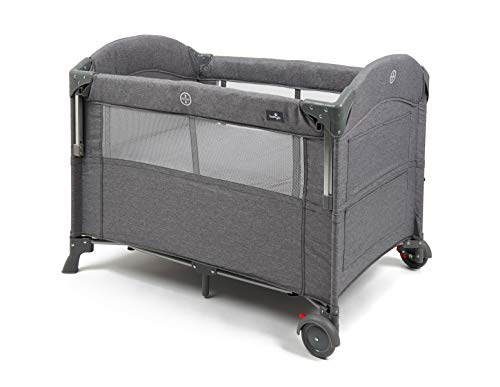
It is important to note that the mattress in a crib, or bedside crib, should be firm. Mattresses with soft surfaces can increase the risk of SIDS and should be avoided. Make sure to use a firm mattress in order to shield your child from stains, allergens and odors.
A bedside crib is a bassinet-style cot that is attached to the edge of your adult bed. These cribs are popular among new parents since they are easy to remove for nighttime feedings. They can also be useful for mothers who are recovering from a c-section or surgery. They are typically cheaper than a larger cot, but they may be used for only six months before your child outgrows them.
Safety features
A bedside cot, also known as a "co-sleeper" is a safe method for infants (or toddlers) to rest close to their parents, while still having their own sleeping space. It can be attached to the sides of the bed of a parent to allow for easier access and soothe the baby if required. However, it is essential to choose a model with safety features to ensure that your child is safe during the night.
The most secure cribs for bedside use guardrails that cover the mattress within a specific distance, stopping children from falling off or climbing out. Some cribs are equipped with locks on their doors to prevent accidental opening. A bedside crib also provides more airflow than other sleep environments. This can reduce the possibility that a child will drown due to a poor or rolling sleeping positions.
The height of the cot and the distance between the bars should also be taken into consideration. The gap between the bars should not be more than 50cm to prevent your baby from climbing out when they reach a certain age. Additionally, the cot should be free from soft toys and other things that pose a suffocation risk. Be sure that the mattress is flat and firm, as infants can choke if their heads are wedged.
Babies are usually not able to regulate their temperatures, so it is best to avoid placing the cot near radiators or sunny windows, which can cause the bedding to get too hot. Also, keep the cot clear from blind cords, which could be a strangulation hazard for babies as they can easily get their fingers caught. The Lullaby Trust recommends avoiding pillows, teddy bears, blankets and sleepers, since they can increase the risk of SIDS.
Find a crib with a removable top panel and a wipe-clean surface. It must also be washable in high temperatures. It's a good idea to allow your baby to have naps during the day in their standalone crib or bassinet. This will allow them to become comfortable with their new space and get familiar with it. To establish the same consistency, you should follow the same bedtime routines and comfort measures that you do at night.